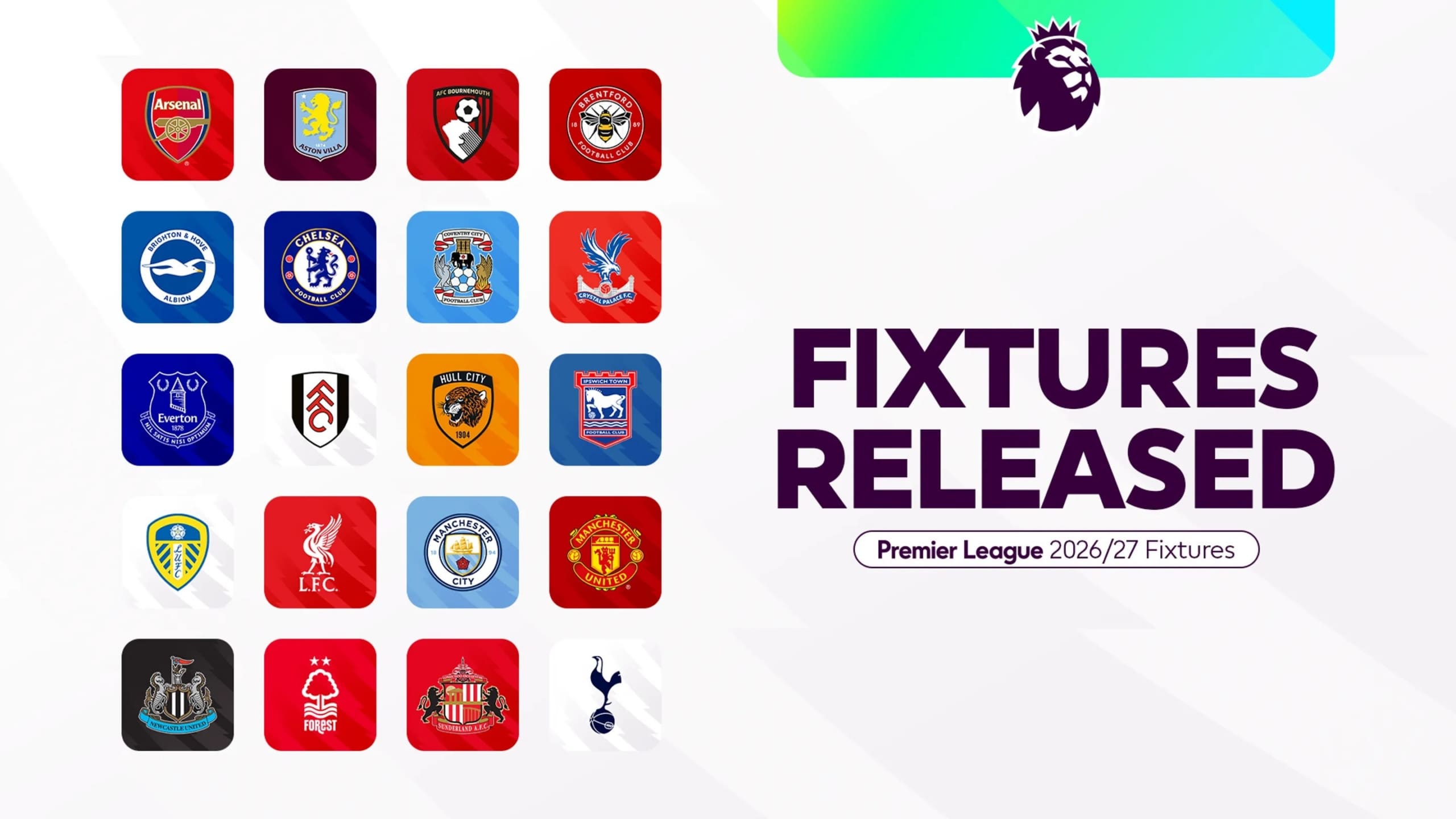
The fixtures for the 2026-27 Premier League have been released, with all 380 matches tentatively scheduled for the season. Kicking off on Friday, August 21, the Premier League will conclude on Sunday, May 30, 2027.
But if you want to actually see a match this season and are traveling from North America, there’s a lot to know about how the Premier League schedule works. Because there are frequent reschedules, both within the same weekend and across multiple months, and if you don’t know what to expect, you could easily book a trip that, sadly, doesn’t align with your targeted game.
Let’s break down the 2026/27 schedule, how it works, and what you need to look out for.
How the Premier League season works
The Premier League season consists of 380 matches, with each of the league’s 20 clubs playing 38 games—one home and one away against each of the other 19 teams.
Although there are 38 Premier League matchweeks, the season spans 41 calendar weeks. That extra time allows the schedule to accommodate domestic cup competitions, European tournaments, and international breaks. As a result, league matches are not evenly distributed throughout the season. Some weeks have no Premier League matches at all, while others feature multiple rounds of fixtures. In some stretches, a club may even play three matches in eight days—for example, on a Saturday, the following Tuesday or Wednesday, and then the next Saturday.
When the fixture list is released, most weekend matches are initially scheduled for 3pm (local time) on Saturday, while midweek fixtures are typically scheduled for Tuesday or Wednesday evenings. However, those kickoff dates and times should be viewed as placeholders rather than final appointments. Throughout the season, matches may be moved either to a different kickoff time during the same Friday-to-Monday matchweek or, in some cases, to an entirely different week.
The two primary reasons Premier League fixtures are rescheduled are television broadcast selections and conflicts arising from domestic or European cup competitions.
Schedule changes due to broadcasting

One of the biggest reasons Premier League fixtures move is television. Sky Sports and TNT Sports are the league’s primary live broadcast partners in the U.K., but because of the country’s long-standing Saturday “3pm blackout” (2:45-5:15pm), they are not permitted to televise matches during that window. The blackout was introduced to encourage supporters to attend matches in person rather than stay home to watch on television.
Instead, broadcasters select several matches each weekend for live coverage, moving them outside the traditional Saturday afternoon kickoff. A fixture originally scheduled for Saturday at 3pm could ultimately be played as early as Friday evening or as late as Monday night.
The Premier League publishes a fixture amendment calendar before each season, outlining when supporters can expect each television selection block to be announced. The league aims to provide at least six weeks’ notice for fixture changes through the end of the calendar year and at least five weeks’ notice from January through the end of the season. However, those announcement dates are targets rather than guarantees, and fixture amendments are occasionally announced earlier or later than planned.
Here’s the Premier League’s expected announcement schedule for the 2026-27 season.
| Match Timeframe | Match Weeks | Update Expected |
|---|---|---|
| August 21-24 | 1 | Already final |
| Aug 28 - Sept 21 | 2-5 | Week of July 13 |
| Oct 9 - Nov 2 | 6-9 | Week of August 24 |
| Nov 6-30 | 10-12 | Week of September 21 |
| Dec 2 - Jan 8 | 13-20 | Week of October 19 |
| Jan 15 - Feb 1 | 21-23 | Week of November 30 |
| Feb 5 - Mar 1 | 24-27 | Week of December 21 |
| Mar 2-22 | 28-30 | Week of January 18 |
| April 9-26 | 31-33 | Week of March 22 |
| Apr 30 - May 3 | 34 | Week of March 22 |
| May 7-10 | 35 | Week of March 29 |
| May 14-17 | 36 | Week of April 5 |
| May 21-24 | 37 | TBD |
| May 30 | 38 | Already final |
The good news is that television-related fixture changes are almost always confined to the same Premier League matchweek. In other words, if you’re traveling to England to see a match, arriving by Friday and departing on Tuesday should let you see your game even if the kickoff day or time changes.
TSI Travel Tip: Whenever possible, arrive at least one day before your match. A weather delay or missed connection on a transatlantic flight could easily cause you to miss a match if you’re scheduled to arrive on game day.
Schedule changes due to Cup competitions
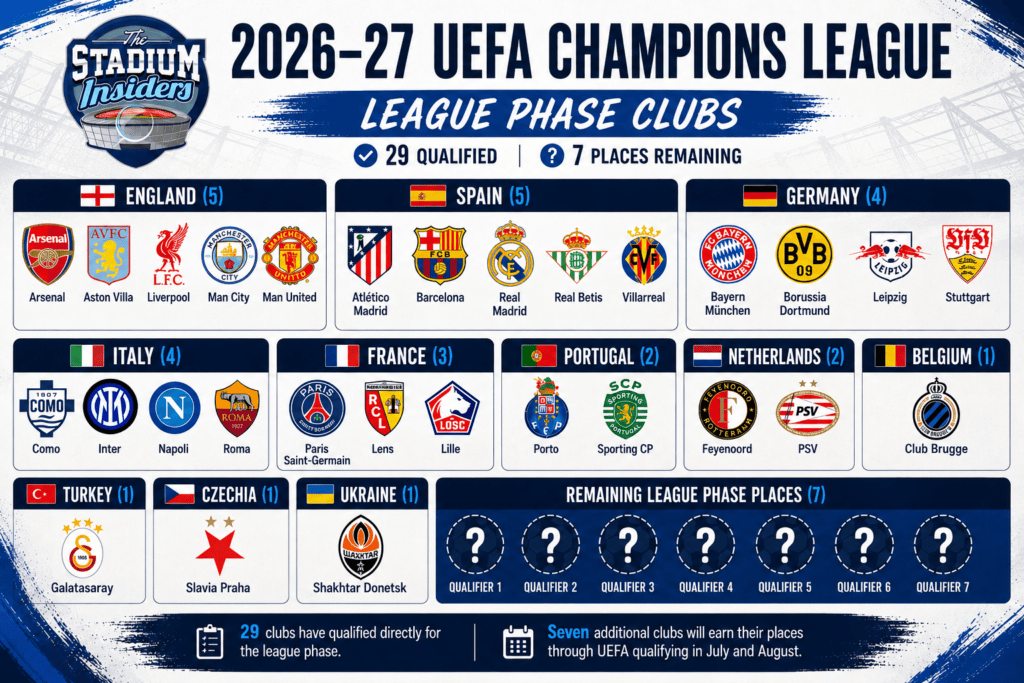
Television isn’t the only reason Premier League fixtures move. Domestic cup competitions—the FA Cup and Carabao Cup—as well as UEFA competitions such as the Champions League, Europa League, and Conference League can also affect the schedule. Unlike television selections, however, these changes can move a match to an entirely different week or even several months later.
The biggest disruptions occur during the latter stages of the FA Cup and the Carabao Cup Final. If a Premier League club is still competing in one of those tournaments when a league fixture is scheduled, the match may have to be postponed and rearranged for a later date. Those makeup games are typically played during an available midweek later in the season.
European competitions usually affect the day a Premier League match is played rather than the week. For example, clubs competing in the Europa League or Conference League on Thursday evenings are generally not scheduled to play Premier League matches on the following Saturday, with those fixtures instead moving to Sunday. Deep runs in European competitions can also make it more difficult to find dates for postponed league matches, sometimes resulting in fixture changes being announced with shorter notice than supporters would prefer.
Unlike broadcast-related schedule changes, which follow the Premier League’s published fixture amendment calendar, cup-related postponements cannot be finalized until the results of the cup matches themselves are known. As a result, you may receive only a few weeks’ notice that a fixture has been moved. If you’re planning a trip around a specific match, it’s wise to avoid booking non-refundable flights, hotels, or rail tickets until your fixture has been confirmed.
It’s also worth remembering that these schedule changes don’t affect only the clubs participating in European competitions. Every Premier League club plays every other club twice each season, so if Liverpool reaches an FA Cup semifinal, Liverpool’s scheduled league opponent is affected as well. While clubs competing in multiple tournaments are more likely to have fixtures moved, schedule changes can ultimately affect any team.
All 20 Premier League clubs compete in England’s two domestic cup competitions: the FA Cup and the Carabao Cup. In addition, nine Premier League clubs qualified for UEFA competitions during the 2026-27 season:
Champions League: Arsenal, Aston Villa, Liverpool, Manchester City, Manchester United
Europa League: Bournemouth, Crystal Palace, Sunderland
Conference League: Brighton & Hove Albion
The schedules below don’t mean Premier League fixtures will automatically be postponed. Instead, they highlight the periods of the season when fixture changes become more likely. If you’re planning a trip around one of these dates, keep a close eye on your club’s schedule as the competitions progress.
Here’s the FA Cup Schedule for 2026/2027
- First Round: Weekend of Saturday, November 7th
- Second Round: Weekend of Saturday, December 5th
- Third Round: Weekend of Saturday, January 9th
- Fourth Round: Weekend of Saturday, February 13th
- Fifth Round: Weekend of Saturday, March 6th
- Quarterfinals: Weekend of Saturday, April 3rd
- Semi-finals: Weekend of Saturday, April 24th
- Final: Saturday, May 22nd
Here’s the Carabao Cup schedule for 2026/27
Unlike the FA Cup, most Carabao Cup rounds are played midweek, so they generally lead to fewer Premier League postponements. The biggest exception is the Carabao Cup Final, when the finalists’ scheduled league matches are always postponed.
- Preliminary Round: August 1-3
- First Round: August 7-9
- Second Round: Week of August 24
- Third Round: Weeks of September 7 and 14
- Fourth Round: Week of October 26
- Quarterfinals: Week of December 14
- Semi-finals, first leg: Week of January 11
- Semi-finals, second leg: Week of February 1
- Final: Sunday, March 21, 2027
How this uncertain schedule affects travel opportunities
For supporters who live in England, these scheduling changes are usually more of an inconvenience than a major obstacle. Five or six weeks’ notice is generally enough time to adjust travel plans, and many fans can reach away matches by train without needing to book flights or overnight accommodations.
For North American visitors, however, the challenge is much greater. International airfare and hotels are often significantly less expensive when booked months in advance, long before Premier League fixtures have been finalized. Waiting until kickoff times are confirmed may provide more certainty, but it can also make the trip considerably more expensive.
So what’s the best strategy?
- Accept a little uncertainty. If you’re targeting a match between two clubs that aren’t competing in Europe and aren’t expected to receive frequent national television coverage, there’s a better chance the fixture will remain close to its original date and time.
- Book refundable reservations whenever possible. If your flight, hotel, or rail tickets can be changed or canceled without a significant penalty, you’ll have much more flexibility if your match is moved.
- Target matches that are less likely to be moved. Matches during the opening and closing weeks of the Premier League season are among the least likely to be postponed to another week. Likewise, the festive holiday period—particularly the rounds scheduled for December 26, December 30, and January 2—typically features a full slate of Premier League matches. While kickoff times may still change for television, those fixtures are generally not postponed to another week because there are few opportunities elsewhere in the calendar.
- If your schedule allows, consider staying a little longer. The holiday period also includes another full round of fixtures on January 6, making it one of the best times of the year to see multiple Premier League matches during a single trip.
And don’t forget about the EFL
If your goal is simply to experience English football, don’t limit yourself to the Premier League.
The English Football League (EFL)—which includes the Championship, League One, and League Two—features some of the country’s most historic clubs, passionate supporters, and unforgettable matchday atmospheres. In many cases, tickets are also easier to obtain and less expensive than Premier League matches.
Remember, promotion and relegation mean that clubs move between the Premier League and the Championship every season. A club that was in the Premier League last year may now be playing in the Championship, while newly promoted clubs are taking their place in the top flight.
With a little planning, you can often build an incredible football itinerary. For example, you might watch an EFL match on Friday night, attend a Premier League match on Saturday, and then catch another Premier League or EFL fixture on Sunday or Monday before heading home.
If you’re flexible with your itinerary, our Ultimate Sports Calendar lets you view schedules by team, venue, and city, as well as complete schedules for the Premier League and Championship. That makes it much easier to identify backup options—or even build a trip around multiple matches instead of just one.
The festive holiday period is one of the best times of the year to plan a football trip to England. Not only are there an incredible number of matches being played, but those fixtures are also among the least likely to be postponed to a different matchweek. During the 2026-27 holiday schedule, the Premier League has full rounds of matches on December 26, December 30, January 2, and January 6, giving visitors an excellent opportunity to see multiple matches during a single trip. The Championship also has tentative full rounds scheduled for December 26, December 29, and January 1, creating an ideal opportunity to combine Premier League and EFL matches during the same visit.
A sample itinerary could look something like this:
Saturday, December 26: Bournemouth at Tottenham in London (Premier)
Tuesday, December 29: Portsmouth at Millwall in London (Championship)
Wednesday, December 30: Arsenal at Fulham (Premier)
Friday, January 1: Queens Park Rangers at Watford (Championship)
Saturday, January 2: Newcastle at Chelsea (Premier)
That would be five matches in eight days, without ever leaving the London metro area. And remember: some matches will be flexed, so there could be additional options on December 27 and 28.
Getting Tickets to English football matches
Buying Premier League tickets is very different from purchasing tickets for professional sports in North America. While many tickets are held by season ticket holders in both North America and England, Premier League clubs generally require supporters to become club members before they can purchase standard match tickets or access the club’s official ticket exchange.
For most visitors, the best way to buy tickets is by purchasing a membership directly from the home club. Memberships are available through each club’s official website and typically cost between £30 and £50 (roughly $40-$60 USD, depending on the exchange rate). Membership provides access to members-only ticket sales, as well as the club’s official ticket exchange, where season ticket holders can resell seats they are unable to use.
It’s important to note that secondary ticket marketplaces such as StubHub and SeatGeek, which are widely used in North America, are generally not the best way to purchase Premier League tickets. Clubs strictly regulate ticket resale, and season-ticket holders risk losing their accounts if they sell tickets through unauthorized platforms. There are also numerous reports of tickets purchased through unofficial marketplaces being canceled or refused at the turnstiles, and without a refund.
It’s also important to understand that a club membership does not guarantee access to tickets. Demand for many Premier League matches far exceeds supply, so even members may be unable to purchase tickets for the fixtures they want. If you’re traveling with family or friends, each person will generally need their own membership, and those memberships must typically be linked together before tickets can be purchased. (Junior memberships are often available at discounted prices.) At the very least, you should expect your group may not be able to sit together, as pairs and scattered single tickets are quite common.
For supporters who are willing to spend more, hospitality packages are another excellent option. Purchased directly from the club, these packages typically include premium seats, access to a private lounge, and food and beverages before, during, and after the match. While they aren’t inexpensive, they can still cost less than a standard, non-premium ticket to many NFL games. Perhaps more importantly, hospitality packages don’t require a club membership, guarantee seats together for your group, and provide a guaranteed ticket without the uncertainty of members-only onsales, ticket exchanges, or unofficial resale marketplaces. If you can afford it, it’s the easiest way to go. But be sure to purchase them early, as hospitality tickets often sell out (especially at lower price points).
Bottom line
Planning a football trip to England requires a different mindset than planning a sports trip in North America. The Premier League fixture list is best viewed as a starting point rather than a final schedule, and successful trips require a little more flexibility than trips in the NFL, MLB, NBA, or NHL.
The good news is that once you understand how the scheduling process works—and build your itinerary with a little flexibility—you can dramatically reduce the chances of an unexpected fixture change ruining your plans. Whether you’re traveling to see one match or hoping to experience multiple games across several leagues, a little preparation goes a long way.
England is one of the world’s great football destinations. Plan carefully, stay flexible, and you’ll give yourself the best possible chance to experience it the way it was meant to be experienced: inside the stadium.